“Types of Masks and Respirators” article to the CDC. By the way, the article was updated Jan 28.
Key Messages:
Masking is a critical public health tool for preventing spread of COVID-19, and it is important to remember that any mask is better than no mask.
To protect yourself and others from COVID-19, CDC continues to recommend that you wear the most protective mask you can that fits well and that you will wear consistently.
Masks and respirators are effective at reducing transmission of SARS-CoV-2, the virus that causes COVID-19, when worn consistently and correctly.
Some masks and respirators offer higher levels of protection than others, and some may be harder to tolerate or wear consistently than others. It is most important to wear a well-fitted mask or respirator correctly that is comfortable for you and that provides good protection.
While all masks and respirators provide some level of protection, properly fitted respirators provide the highest level of protection. Wearing a highly protective mask or respirator may be most important for certain higher risk situations, or by some people at increased risk for severe disease.
CDC’s mask recommendations provide information that people can use to improve how well their masks protect them.
This page describes different types of masks and respirators that you can use to protect yourself and others from getting and spreading COVID-19. Masks and respirators can provide varying degrees of protection, with well-fitting National Institute for Occupational Safety and Health (NIOSH)-approved respirators offering the most protection. Masking is a critical public health tool for preventing the spread of COVID-19, and it is important to remember that any mask is better than no mask. This page presents options in order of least to most protective. To protect yourself and others from COVID-19, CDC continues to recommend that you wear the most protective mask you can that fits well and that you will wear consistently.
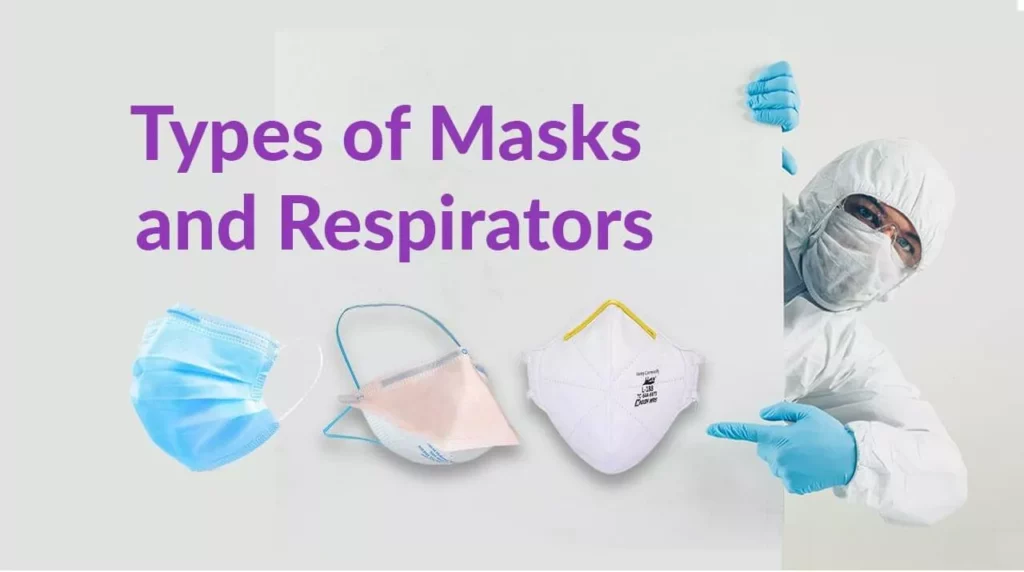
Types of Masks and Respirators
Masks are made to contain droplets and particles you breathe, cough, or sneeze out. If they fit closely to the face, they can also provide you some protection from particles spread by others, including the virus that causes COVID-19.
Respirators are made to protect you by filtering the air and fitting closely on the face to filter out particles, including the virus that causes COVID-19. They can also contain droplets and particles you breathe, cough, or sneeze out so you do not spread them to others.
Choosing a Mask or Respirator for Different Situations
Masks and respirators (i.e., specialized filtering masks such as “N95s”) can provide different levels of protection depending on the type of mask and how they are used. Loosely woven cloth products provide the least protection, layered finely woven products offer more protection, well-fitting disposable surgical masks and KN95s offer even more protection, and well-fitting NIOSH-approved respirators (including N95s) offer the highest level of protection.
Whatever product you choose, it should provide a good fit (i.e., fitting closely on the face without any gaps along the edges or around the nose) and be comfortable enough when worn properly (covering your nose and mouth) so that you can keep it on when you need to. Learn how to improve how well your mask protects you by visiting CDC’s Improve How Your Mask Protects You page.
A respirator has better filtration, and if worn properly the whole time it is in use, can provide a higher level of protection than a cloth or procedural mask. A mask or respirator will be less effective if it fits poorly or if you wear it improperly or take it off frequently. Individuals may consider the situation and other factors when choosing a mask or respirator that offers greater protection.
When caring for someone who is sick with COVID-19.
When working at a job where you interact with large numbers of the public, especially when not everyone is consistently wearing a mask. For example, bus drivers and grocery store workers.
When riding on planes, buses, trains, or other forms of public transportation*, especially if it is for a long period of time on crowded conveyances.
When physical distancing is not possible or when you are in crowded indoor or outdoor public settings.
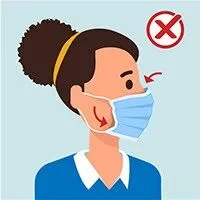
When choosing a mask, look at how well it fits. Gaps can let air with respiratory droplets leak in and out around the edges of the mask. Gaps can be caused by choosing the wrong size or type of mask and when a mask is worn with facial hair.
It is important to check that it fits snugly over your nose, mouth, and chin.
Check for gaps by cupping your hands around the outside edges of the mask.
Make sure no air is flowing from the area near your eyes or from the sides of the mask.
If the mask has a good fit, you will feel warm air come through the front of the mask and may be able to see the mask material move in and out with each breath.
Cloth Masks
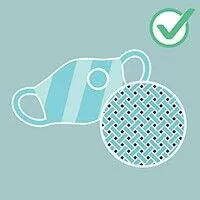
Wear cloth masks with
A proper fit over your nose, mouth, and chin to prevent leaks
Multiple layers of tightly woven, breathable fabric
Nose wire
Fabric that blocks light when held up to bright light source
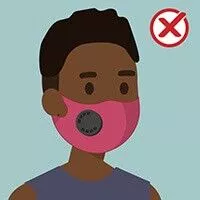
Do NOT wear cloth masks with
Gaps around the sides of the face or nose
Exhalation valves, vents, or other openings (see example)
Single-layer fabric or those made of thin fabric that don’t block light
Wet or dirty material
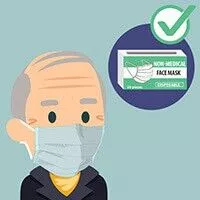
Procedure Masks
Disposable procedure masks are widely available. They are sometimes referred to as surgical masks or medical procedure masks.
Wear procedure masks with
A proper fit over your nose, mouth, and chin to prevent leaks
Multiple layers of non-woven material
A nose wire
Do NOT wear procedure masks with
Gaps around the sides of the face or nose (see example)
Wet or dirty material
Ways to have better fit and extra protection with cloth and disposable masks
Wear two masks (disposable mask underneath AND cloth mask on top)
Combine either a cloth mask or disposable mask with a fitter or brace
Knot and tuck ear loops of a 3-ply mask where they join the edge of the mask – For disposable procedure masks, fold and tuck the unneeded material under the edges. (For instructions, see the following https://youtu.be/GzTAZDsNBe0external)
Use masks that attach behind the neck and head with either elastic bands or ties (instead of ear loops)
Masks that Meet a Standard
Some masks are designed and tested to ensure they perform at a consistent level. These masks are labeled to tell you what standard they meet. These masks are labeled:
These are new standards. Lists of masks that meet these standards and more information on their availability can be found on the NIOSH Personal Protective Equipment Information (PPE-Info) webpage. These masks have markings printed on the product to indicate they are authentic.
Follow manufacturer’s instructions on how to wear, store, and clean or properly dispose of the mask. These should be worn according to the manufacturer’s instructions without modifications.
Wear masks that meet a standard with
A proper fit over your nose and mouth to prevent leaks
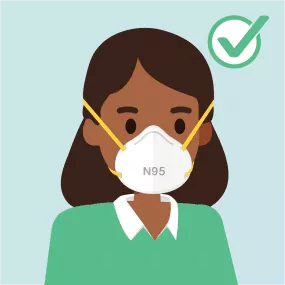
When choosing a respirator, look at how well it fits and read the manufacturer instructions. These instructions should include information on how to wear, store, and clean or properly dispose of the respirator. Respirators have markings printed on the product to indicate they are authentic, see appropriate N95 markingsimage and KN95 markings.
It is important for respirators to form a seal to the face to work properly. Gaps can let air with respiratory droplets leak in and out around the edges of the mask. Gaps can be caused by choosing the wrong size or type of respirator or when a respirator is worn with facial hair.
It is important to determine if your respirator fits properly. NIOSH and OSHA have developed a video and factsheetpdf icon demonstrating how to determine if the respirator fits properly (user seal check) and how to properly put on and take off a respirator. The information in the video and factsheet about how to use an N95 respirator also applies to international respirators, like KN95 respirators.
Most publicly available respirators are disposable and should be discarded when they are dirty, damaged, or difficult to breathe through.
More information on these two types of respirators is provided below.
Respirators that Meet International Standards
Some respirators are designed and tested to meet international standards. The most widely available respirators that meet an international standard are KN95 respirators. Other examples include 1st, DL2, DL3, DS2, DS3, FFP2, FFP3, KN100, KP95, KP100, P2, P3, PFF2, PFF3, R95, and Special.
What to know about international respirators
They are designed to standards that do not often have a quality requirement.
They filter varying levels of particles in the air depending on the standard they are designed to meet.
They seal tightly to your face when fitted properly.
It is important to pick a respirator that fits your face and seals well since not all fit the same.
Do NOT wear international respirators
If they have exhalation valves, vents, or other openings
NIOSH approves many types of filtering facepiece respirators. The most widely available are N95 respirators, but other types (N99, N100, P95, P99, P100, R95, R99, and R100) offer the same or better protection as an N95 respirator. Lists of respirators that are NIOSH-approved can be found on the NIOSH-Approved Particulate Filtering Facepiece Respirators webpage.
CDC recommends that specially labeled “surgical” N95 respirators — a special subtype of N95 respirators that provide additional protection against hazards present during medical procedures, such as blood splatter — should be reserved for use by healthcare personnel.
When worn consistently and properly, they provide the highest level of protection from particles, including the virus that causes COVID-19. Additionally, they contain your respiratory droplets and particles so you do not expose others.
They seal tightly to your face when fitted properly.
It is important to pick a respirator that fits your face and seals well since not all fit the same.
They filter at least 95% of particles in the air when approved by NIOSH and when you have a proper fit.
Do NOT wear NIOSH-approved respirators
If it is hard to breathe while wearing them
If they are wet or dirty
With other masks or respirators
Considerations for Children
Masks
Anyone ages 2 years or older who is not vaccinated or not up to date on vaccines should wear masks in indoor public spaces. This recommendation also applies to people who are up to date on their vaccines when they are in an area of substantial or high transmission. CDC also currently recommends universal indoor masking for all teachers, staff, students, and visitors to K-12 schools, regardless of their vaccination status or the area’s transmission rates. The benefits of mask-wearing are well-established.
Respirators
Parents and caregivers may have questions about NIOSH-approved respirators (such as N95s) for children. Although respirators may be available in smaller sizes, they are typically designed to be used by adults in workplaces, and therefore have not been tested for broad use in children.
Selecting Masks
Masks and respirators should not be worn by children younger than 2 years.
Choose a well-fitting and comfortable mask or respirator that your child can wear properly. A poorly fitting or uncomfortable mask or respirator might be worn incorrectly or removed often, and that would reduce its intended benefits.
Choose a size that fits over the child’s nose and under the chin but does not impair vision.
Follow the user instructions for the mask or respirator. These instructions may show how to make sure the product fits properly.
Some types of masks and respirators may feel different if your child is used to wearing a regular cloth or disposable procedure masks.
Safety precautions
If your child has a medical condition, such as a heart or lung problem, ask their healthcare provider before they use methods to improve mask fit or use an ASTM F3502 mask or a respirator.
If your child has a hard time breathing, gets dizzy, or has other symptoms while you are trying to get the mask to fit better or when using an ASTM F3502 mask or a respirator, choose a regular cloth or disposable mask. They should continue to follow CDC guidance to protect themselves and others. Consult your healthcare provider if these symptoms do not resolve.
Alternative Masks for Special Situations
Clear masks or cloth masks with a clear plastic panel are an alternative type of mask that may be helpful when interacting with certain groups of people, such as:
People who are deaf or hard of hearing
Young children or students learning to read
Students learning a new language
People with disabilities
People who need to see the proper shape of the mouth for making appropriate vowel sounds
The FDA cleared for marketing a transparent medical mask. These transparent medical masks should be reserved for use by healthcare workers and patients who require them.
If you use this type of mask, make sure
You can breathe easily
Excess moisture does not collect on the inside of the mask


Leave a Reply